AI is already helping doctors find cancers earlier and more accurately than before.
Some say machines will replace radiologists, but the real story is simpler and better: AI narrows the search and points experts to the smallest, often hidden warning signs.
Tools like convolutional neural networks learn patterns from tens of thousands of scans and, in trials such as a Swedish study, boosted breast cancer detection by about 20%.
The upshot: smarter screening, fewer needless recalls, and earlier treatment when it matters most.
AI-Assisted Mammography And Imaging-Based Cancer Detection
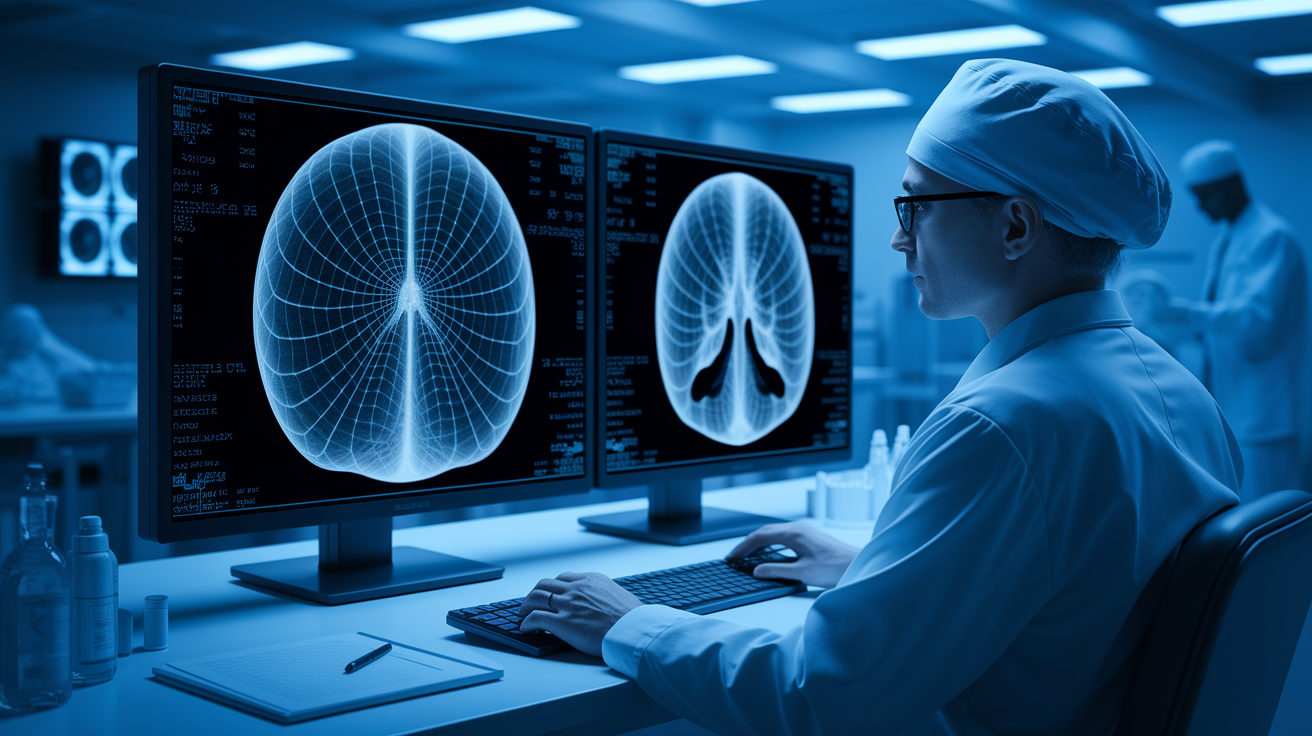
Convolutional neural networks, or CNNs, are the main engine behind AI-assisted mammography and much of radiology AI for early diagnosis. Think of a CNN as a pattern-spotting system. It scans an image pixel by pixel, learning what “normal” tissue looks like from thousands of labeled examples, then flags anything that deviates from that pattern for a radiologist to review. This is computer vision for tumor detection at its most practical, not replacing the human, but narrowing down where their attention should go. Worth noting: this kind of scan-level analysis is different from what happens on a pathology slide, where the AI is looking at cells rather than shapes on an X-ray or MRI.
Breast Cancer Screening With AI
Mammography models trained with convolutional neural networks in cancer screening are built to catch masses, architectural distortion, and microcalcifications, those tiny calcium specks that can be an early signal of trouble. One notable model was trained on more than 90,000 mammograms and, in some comparisons, actually outperformed radiologists in accuracy. That’s a striking data point, and it says a lot about how far this technology has come in a fairly short time.
Real-world trial evidence backs this up too. A randomized trial in Sweden found a 20% increase in breast cancer detection using AI-assisted mammography compared with standard screening alone. That’s not a lab number. That’s a trial result, and it points toward AI working best as a support tool layered on top of expert review, not as a stand-alone diagnostic system.
False positive reduction with AI matters a lot here, because mammography has always walked a tightrope. Catch more real cancers without triggering a wave of unnecessary recalls, biopsies, or anxious waiting periods for patients. The goal isn’t just “more detections.” It’s smarter, more precise ones.
Lung Nodule Detection Via Low-Dose CT
Low-dose CT scans are the standard tool for lung cancer screening, and AI adds real value by reviewing these scans for small or low-contrast nodules that might slip past during a conventional read. The models track where a nodule sits, how big it is, and whether it’s growing over time, which matters enormously for deciding what happens next.
Just like with mammography, there’s a balance to strike. Benign nodules can trigger false positives, leading to more tests than necessary, while subtle, early lesions carry a false-negative risk if they’re too faint to register. Getting this balance right is central to making lung screening genuinely useful rather than just noisy.
Beyond spotting nodules, radiology segmentation algorithms trace the actual boundaries of a lesion or tumor on a scan. This lets clinicians measure size, shape, and how things change from one scan to the next, giving a clearer picture of whether something is stable or worth acting on.
Pathology AI For Spotting Early-Stage Tumors
Pathology AI works on a completely different kind of image than radiology tools do. Instead of scans showing organs and tissue masses, it looks at digitized whole-slide images, essentially microscopic snapshots of tissue samples packed with cellular detail invisible to the naked eye during a rushed manual review.
**Slide-Level
Final Words
AI is already spotting tiny, early warning signs on scans, slides, and in patient records—often before symptoms appear. We covered computer vision, pathology models, record-based risk tools, and trial evidence that AI improved detection.
- Image analysis that identifies subtle visual patterns in medical scans.
- Molecular and genomic analysis that detects cancer-associated biological signatures.
- Record-based risk prediction that finds patients who need closer screening.
That’s why learning how AI improves early cancer detection matters: earlier diagnosis can mean timelier, less invasive care and better use of clinical time.
FAQ
Q: How is AI being used to improve early cancer detection?
A: AI is being used to improve early cancer detection by analyzing medical images, molecular and genomic data, and patient records to flag subtle warning signs for clinician review, often before symptoms appear.
Q: How accurate is AI in detecting cancer?
A: AI accuracy in detecting cancer varies by application. Some models match or outperform clinicians for specific tasks, but real-world performance depends on cancer type, dataset quality, and clinical workflow integration.
Q: What is 90% of cancer caused by?
A: About 90% of cancers are linked to environmental and lifestyle factors, like smoking, diet, infections, and pollutants, rather than inherited genes, so many cases may be prevented by public-health measures and behavior changes.
