Think most charity stories are just feel-good headlines with no proof?
These two campaigns show that’s not always true.
They published clear numbers, kept to a timeline, and pointed to real changes in people’s lives.
In this post we’ll walk through a 1,300-mile cancer ride and a 10-year back-to-school effort, show what they raised and how they measured impact, and give a simple checklist so you can spot solid results versus spin.
By the end you’ll know what to trust—and why it matters.
Two Documented Charitable Outcomes With Measurable Results
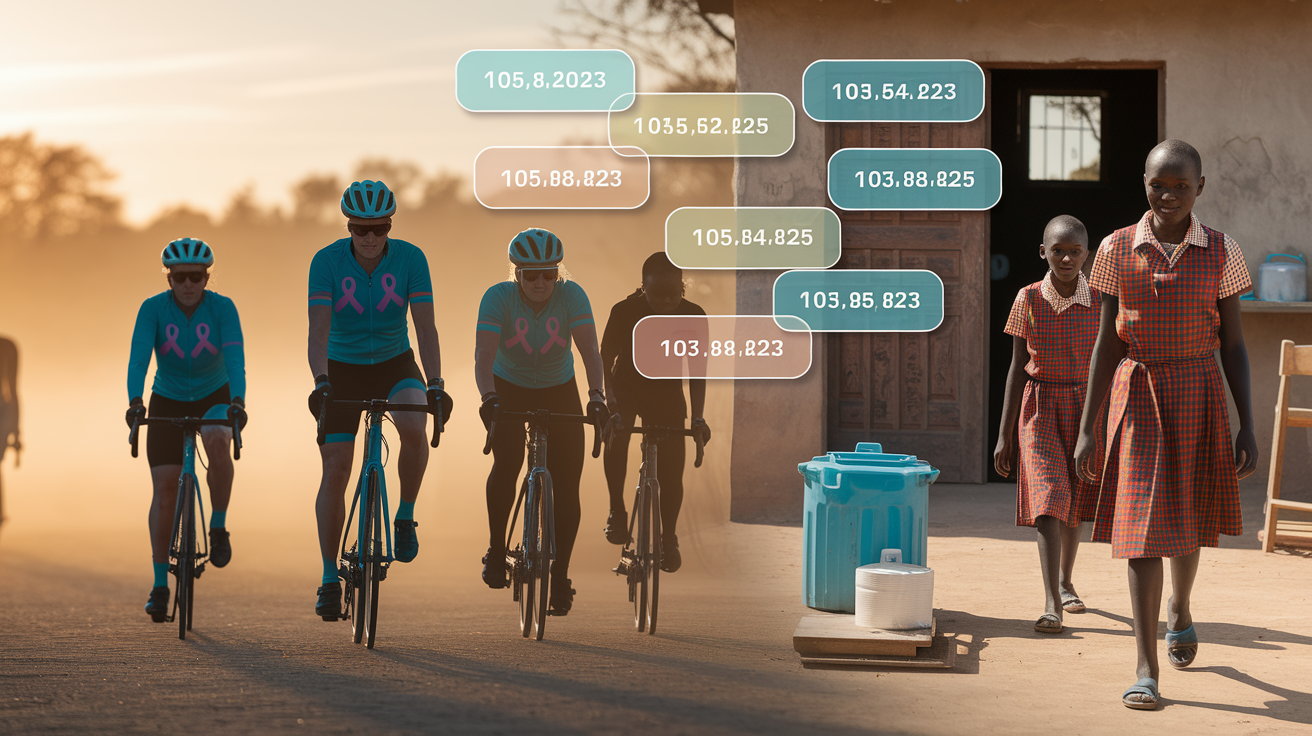
The best charity success stories share four things in common: verified financial results, a clear number of people reached, a defined timeline, and real evidence that something in someone’s life actually changed. Not vague claims. Not “we made a difference.” Actual, checkable proof.
That’s the bar these next two stories clear. Both organizations published their numbers, stuck to a timeline, and can point to real outcomes tied to real funding. Here’s what they did, and how they did it.
Challenge to Conquer Cancer’s 2023 Ride to Maine
-
Problem: Cancer treatment and support programs need sustained funding, and one-time donations rarely cover the long-term costs involved. This campaign was built to address that ongoing need rather than a single emergency ask.
-
Action: Riders completed a 1,300-mile relay from Greenville, South Carolina, to Lewiston, Maine. The event runs on peer-to-peer fundraising, so each participant builds their own donor network and fundraising page instead of relying on one central ask.
-
Measurable outcome: The 2023 ride raised more than $175,000, beating its goal by over $25,000. Across 16 years, the campaign has raised more than $2 million total. The organization didn’t publicly disclose an exact beneficiary count for this specific ride, so that figure isn’t included here rather than guessed at.
-
Human transformation: Long-running cycling fundraisers like this one are built on the idea that repeated giving supports people through years of treatment, not just a single moment of crisis. That’s the whole premise of a 16-year effort. It’s not a one-time rescue. It’s a promise to keep showing up.
-
Challenge overcome: Keeping donors and riders engaged for 16 straight years is genuinely hard. Fundraising fatigue is real, and most campaigns fade after a few years. This one didn’t, and that says something about how the organizers kept the mission and the momentum alive.
-
Source: Figures are drawn from the organization’s 2023 campaign reporting. A specific attributed beneficiary quotation wasn’t available in the source material reviewed, so none is included here.
-
Lesson: A demanding, recurring event, one that asks a lot of its participants physically and logistically, can actually build stronger long-term participation than an easier annual ask. The difficulty becomes part of the story people want to be part of.
Kilgoris Project’s Back-to-School Challenge
-
Problem: In the Maasai community served in Southwest Kenya, access to education ties directly to more basic needs: daily meals, clean water, and local economic stability. You can’t separate school attendance from whether a family has enough to eat that week.
-
Action: 2023 marked the 10th anniversary of the Back-to-School Challenge, a campaign built around getting kids back into classrooms while supporting the broader needs around them.
-
Measurable outcome: The campaign set a $200,000 goal and raised $218,180, beating the target by $18,180. A specific verified beneficiary count wasn’t identified in the available reporting, so it’s left out here rather than estimated.
-
Human transformation: The design of this program links school access to daily meals and clean water, so a student’s ability to stay enrolled isn’t separated from whether their family has what it needs at home. That connection is the whole point.
-
Challenge overcome: Beating a fundraising goal is one thing. Doing it while supporting several linked needs, education, food, water, and economic development, all at once, is a much heavier lift than funding a single short-term service.
-
Source: Figures come from the 2023 Back-to-School Challenge campaign reporting, marking the initiative’s 10 year milestone.
-
Lesson: When education funding pairs with meals, water, and economic support, it addresses the actual barriers keeping kids out of school in the first place. Fixing one piece alone often isn’t enough.
How to Evaluate Reported Charity Outcomes

An inspiring story is still worth a second look. Good intentions and real numbers aren’t mutually exclusive, but they also aren’t automatically the same thing. Here’s a simple framework for checking a charity’s reported success before you take it at face value.
-
Verification: Do the amounts, dates, and beneficiary totals actually line up with the timeline described? A campaign that claims fast results over an oddly long stretch of time, or numbers that don’t match its own reporting, deserves a closer look.
-
Consent: Were the names, images, and quotations shared with informed permission? Ethical reporting means the people featured actually agreed to have their story told, and that it was handled with cultural sensitivity, not used simply because it made a compelling headline.
-
Selection bias: Is this result typical, or is it the one exceptional case chosen because it looks great in a press release? Most organizations highlight their strongest year, their best campaign, their most photogenic outcome. That’s normal. It’s just worth remembering.
-
Sourcing: Audited financial reports, annual reports, and official campaign updates carry more weight than a promotional blurb with no dates attached. Independent assessments and dated press coverage are the gold standard here.
One more thing worth remembering: money raised and supplies distributed are outputs. School attendance going up, families eating more reliably, health outcomes improving, that’s outcome. The best stories show both. The weaker ones only show the first.
Fundraising Campaigns That Expanded Access to Essential Support

A dollar total tells you how much came in. It doesn’t tell you what happened next. The real story is in what that money became: a transplant patient’s medical bill covered, a teenager’s first entrepreneurship class, a family’s rent finally caught up. Here are two campaigns that connected their totals to something specific.
National Foundation for Transplants:
-
Problem: Transplant patients and their families often face steep, ongoing costs that insurance doesn’t fully cover: medication, travel for treatment, time away from work. These costs can pile up fast and derail a family’s finances even after a successful transplant.
-
Action: In 2023, the organization leaned on individual patient fundraising pages, letting each patient share their own story and collect support directly.
-
Measurable outcome: More than $1,109,000 was raised from over 4,260 donors in 2023. A specific total number of patients
Final Words
We showed real, verifiable wins in action: Challenge to Conquer Cancer’s Ride to Maine cleared $175,000+ in 2023 and Kilgoris Project’s Back-to-School Challenge raised $218,180, each tied to human before-and-after accounts.
Next, you got a short checklist – verification, consent, selection bias, and sourcing – so you can judge claims instead of taking them at face value.
We also looked at fundraising and community programs that turned revenue into steady services.
Keep using those checks and share these charity success stories – you’ll see small wins add up.
FAQ
Q: What is the 30/70 rule for charities?
A: The 30/70 rule for charities is a guideline that suggests at least 70% of donations go to programs and no more than 30% toward administration and fundraising, helping donors judge operational efficiency.
Q: What are the most famous success stories?
A: The most famous success stories are well-documented campaigns like Challenge to Conquer Cancer’s Ride to Maine, Kilgoris Project’s Back-to-School Challenge, National Foundation for Transplants, Aspiring Youth Academy, and Hope for the City.
Q: How to raise $10,000 for charity?
A: To raise $10,000 for charity, set a clear goal and timeline, build peer-to-peer donation pages, combine online and local events, seek matching gifts, partner with local groups, and share regular progress updates.
Q: What is a good success story?
A: A good success story is a concise, verifiable account that links resources to real change: dated metrics, beneficiary counts, before-and-after testimony, clear sources, and informed consent for shared personal details.
