Think you can’t teach kindness in a single class?
It feels true, but you can.
This post lays out short, ready-to-use lessons, 15 to 20 minutes each, that get kids actually practicing kind actions, give teachers simple scripts, and shift classroom tone for the better.
Research shows kinder classrooms boost attendance, focus, and friendships, so this is more than feel-good work.
Try the quick-start plan today.
Small practice adds up to lasting compassion.
Quick-Start Kindness Lesson: A Ready-to-Use Plan for Any Age
You don’t need a binder full of theory to teach kindness today. All you need is about 20 minutes, something to read or watch, and a little room for kids to practice out loud. Here’s a lesson you can pick up and use this afternoon. No prep weekend required.
Quick-Start Lesson
| Element | Details |
|---|---|
| Objective | Students identify one kind action and practice it in real time. |
| Materials | A short video or picture book, paper, and markers. |
| Duration | 15 to 20 minutes. |
| Hook | A 3 to 5 minute video or read aloud showing a character being kind. |
| Discussion prompts | “How do you think that character felt?” and “When has someone been kind to you?” |
| Guided role-play | Pair students up to act out a kind response to a common scenario (sharing, comforting, including someone), while the teacher circulates and offers language support. |
| Independent application | Each student completes one kind act sometime during the day, then jots it down or draws it. |
| Exit-ticket assessment | Student says or writes one kind action they took or plan to take. |
This structure works because it mirrors how solid social-emotional learning lessons get built. A hook to spark interest, guided practice to build confidence, and independent application so the skill actually sticks.
A few quick tweaks make this flexible across ages. For preschool, swap the discussion for a puppet show and let kids draw instead of write. For elementary grades, add a simple worksheet or sentence starter to support independent work. For middle school, trade the role-play for a short restorative-scenario discussion, where students talk through how a real conflict could have gone differently.
At their core, kindness lessons are structured character-education activities. They teach empathy vocabulary and behavior through modeling, practice, and reflection, giving kids the words and the confidence to act on what they already feel.
Why Kindness Lessons Matter: The Research Behind Compassion Curriculum
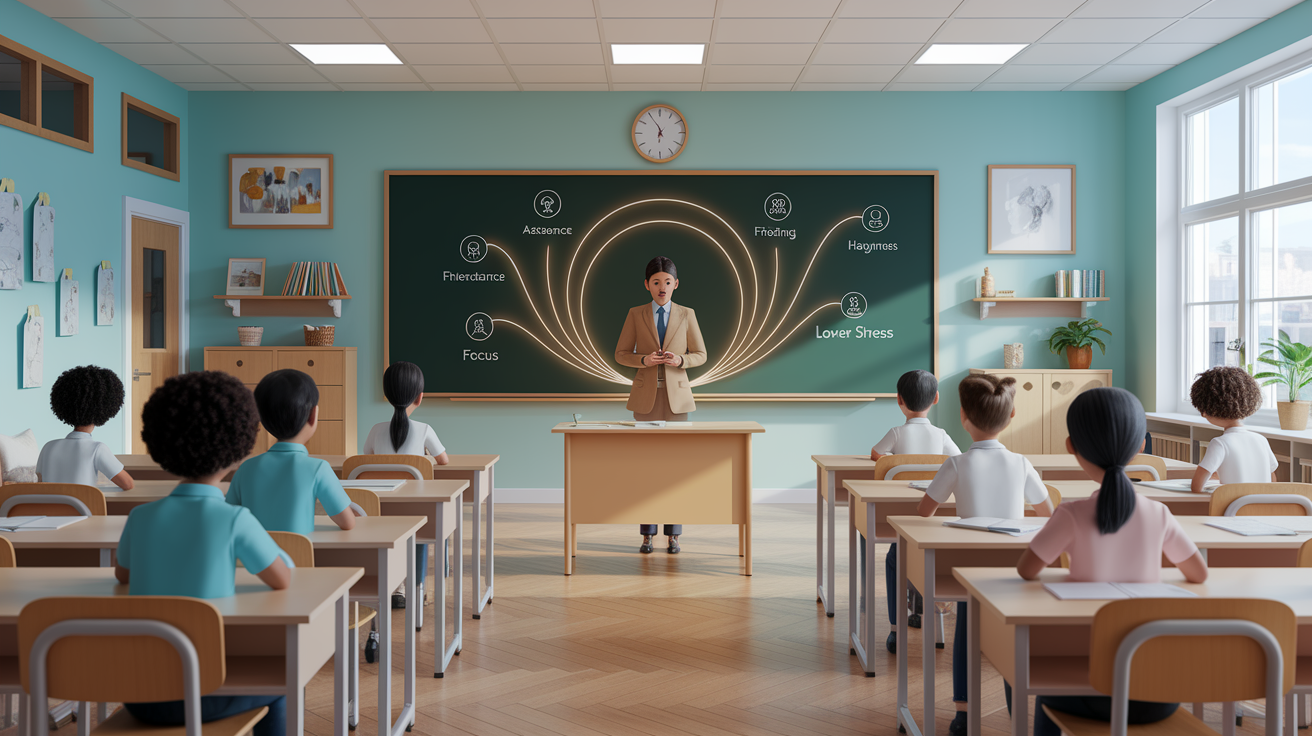
Kindness curriculum isn’t just a feel-good add-on. It’s tied to measurable classroom outcomes. Research shows students who see their teachers as caring show up more, engage more, and earn better grades. That connection matters because kindness education isn’t separate from academics. It’s part of what makes the whole classroom work better, for everyone in the room.
There’s a brain-based side to this too. Teaching kindness has been linked to increased happiness, a boost in serotonin, and lower stress levels in kids who practice it regularly. Students also show improved focus and deeper, steadier friendships. And mindfulness, when paired with kindness lessons, seems to strengthen empathy even further. A few quiet minutes of noticing feelings, paired with intentional practice, adds up to a calmer, more connected classroom over time.
Preschool and Kindergarten Kindness Lessons: Visual Play Activities
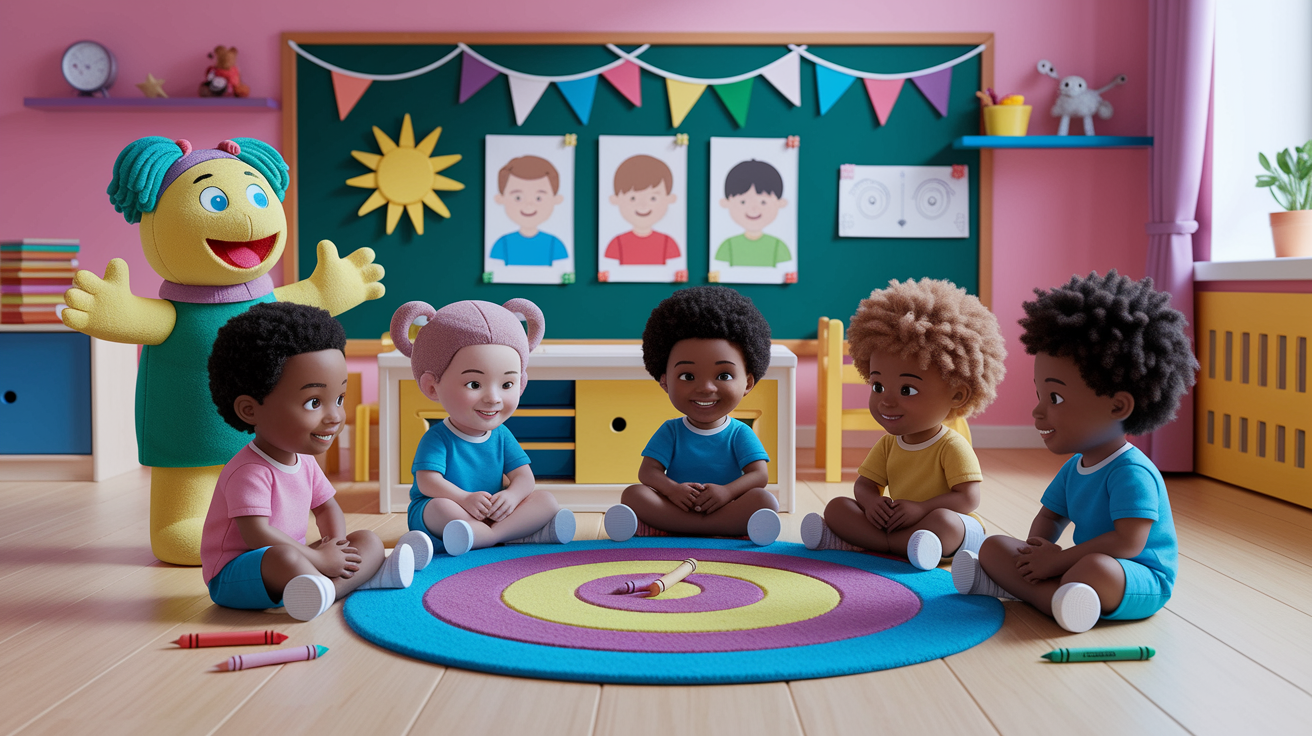
Young learners understand kindness through pictures, motion, and short bursts of story, not long explanations. Keep everything visual, concrete, and brief, and you’ll see more genuine engagement than any worksheet could pull off at this age.
Sample Activities
- Read-aloud circle time using titles like Have You Filled a Bucket Today?, The Big Umbrella, or A Sick Day for Amos McGee.
- Directed-draw speech-bubble craft, where students draw a self-portrait and add a kind word or phrase inside a speech bubble.
- “Color Your World” coloring sheet, paired with a short conversation about the colors of kindness.
- Puppet role-play acting out simple kind and unkind scenarios, then asking kids which one felt better.
- Single-sentence teacher praise practice, like “That was so kind of you to share,” repeated often enough that kids start using the phrase themselves.
Implementation Notes
Keep sessions under 10 minutes. Little ones lose focus fast, and that’s completely normal, not a sign anything’s going wrong. Props help enormously here. A puppet or a class stuffed animal used as a talking piece gives kids something to look at besides each other, which often makes shy students more willing to speak. Move quickly between activities to match their attention span, and don’t be afraid to repeat favorites across the week.
Simple Assessment
Formal assessment isn’t the goal at this age. Instead, watch for a child pointing to or naming a kind action in the picture book, coloring sheet, or craft. That small moment of recognition, “she’s being kind because she’s sharing,” is exactly the success marker you’re looking for.
Elementary Kindness Lessons: Worksheets and Letter-Writing (Grades 1-5)
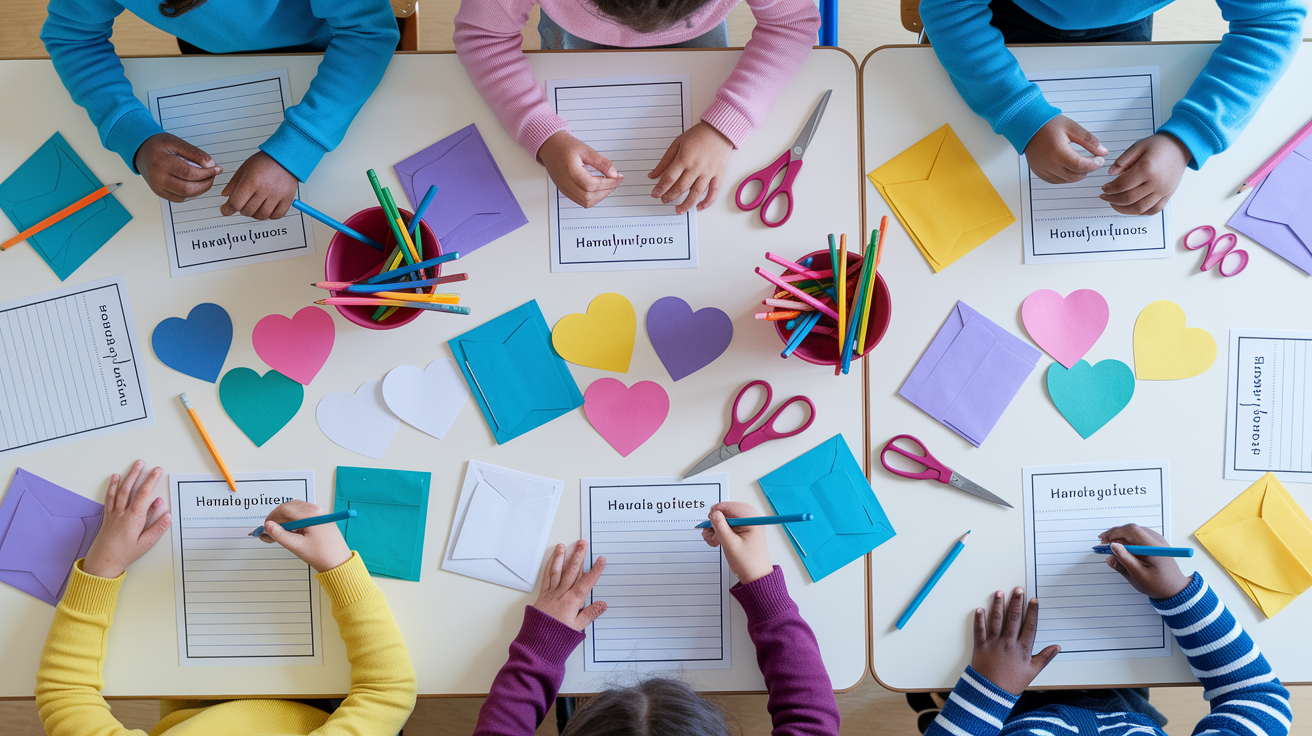
By first grade, kids are ready for more structure, and that’s where worksheets, sorting activities, and short writing exercises earn their keep. These tools give kindness a vocabulary kids can hold onto and reuse.
Flap templates work well for sorting kind versus unkind behaviors, letting students lift a flap to reveal the “answer” underneath. Stronger readers can rotate through a pocket-chart sorting center, matching behavior cards to the right category on their own. Poem templates add another layer, guiding students through shared reading, then publishing their own kindness poem, sometimes even typed in a word processor to meet a technology standard around copy and paste.
One especially powerful activity is called the Write Around. Give each student a sheet with sentence starters like “One idea I’ve gotten from you is…” or “I really appreciate when you…”. Papers circulate around the room, and
Final Words
Start the lesson now: use the quick-start 15–20 minute plan with a short hook, guided role-play, an independent kind act, and a simple exit ticket. Teach it today.
We also covered why this works — research shows kinder classrooms boost attendance, focus, and mood — and gave age-ready activities: visual play for preschool, worksheets and letter-writing for elementary, plus middle-school tweaks.
These kindness lessons are practical and easy to repeat. Try one next week and watch small changes add up.
FAQ
Q: What Bible story teaches kindness?
A: The Bible story that teaches kindness is the Good Samaritan (Luke 10:25–37). It shows helping a hurt stranger across cultural lines, modeling mercy, practical care, and putting love into action.
Q: What are 5 ways to show kindness?
A: Five ways to show kindness are listening closely, offering help, sharing something, praising someone, and doing a small surprise favor — all build trust and brighten someone’s day.
Q: What are the five qualities of kindness?
A: The five qualities of kindness are empathy, patience, generosity, humility, and respect — they help people relate, respond calmly, share resources, stay grounded, and honor others’ worth.
Q: What are 20 acts of kindness?
A: Twenty acts of kindness include smile, hold door, say thanks, write note, share snack, help bags, donate, volunteer, pick litter, plant tree, compliment, call friend, babysit, give ride, cook meal, buy coffee, listen, forgive, invite in, tutor.
