What if a neighborhood fridge could both cut food waste and feed hungry neighbors?
Across cities, everyday people and local shops drop extra food into public refrigerators that anyone can use.
Volunteers check items and keep things safe, so good food doesn’t get tossed and people get meals right away.
Community fridges turn surplus into dignity: fewer scraps in the trash and more dinners on the table.
This piece shows how the model works, who benefits, and why these humble fridges are quietly changing cities for the better.
Community Fridges: The Surplus-to-Hunger Model
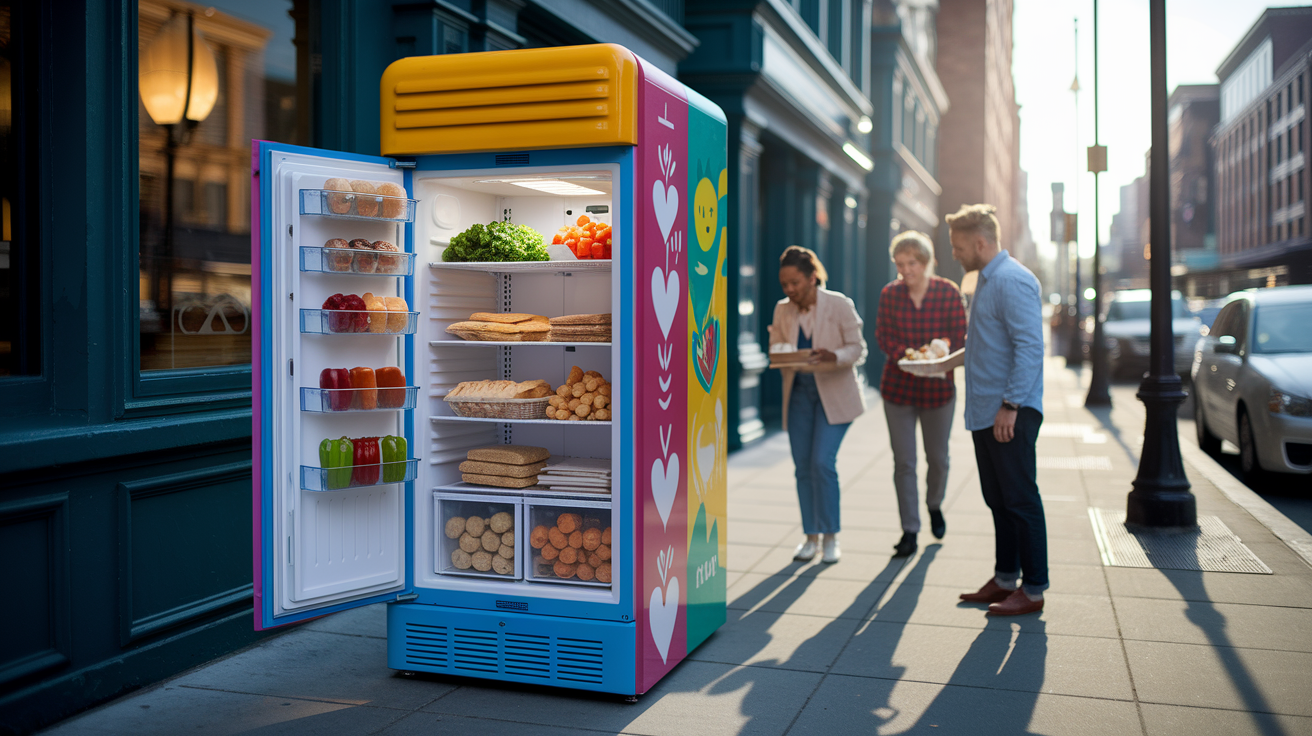
A community fridge is a public refrigerator, stocked by everyday people and local businesses, where anyone can take food for free. No questions asked. Donors drop off extra food, volunteers keep the fridge organized and safe, and neighbors stop by to pick up what they need. It’s a simple loop, and it does two things at once. It keeps good food from getting tossed, and it puts that same food into the hands of people facing food insecurity. The proof is already in the numbers. The UK Community Fridge Network alone has redistributed enough food to provide roughly 50,000 meals in a single month, which shows just how much impact a shared refrigerator can have when a community rallies around it.
This isn’t a brand new idea. Community fridges have been popping up for about a decade, with one of the earliest U.S. versions landing in Davis, California, back in 2014. What ties every fridge together, no matter the city or the paint job on the door, is one simple rule: take what you need, leave what you can. It’s an honor system built on trust, and it’s the quiet engine behind the whole movement.
How Community Fridges Work From Donation to Pickup
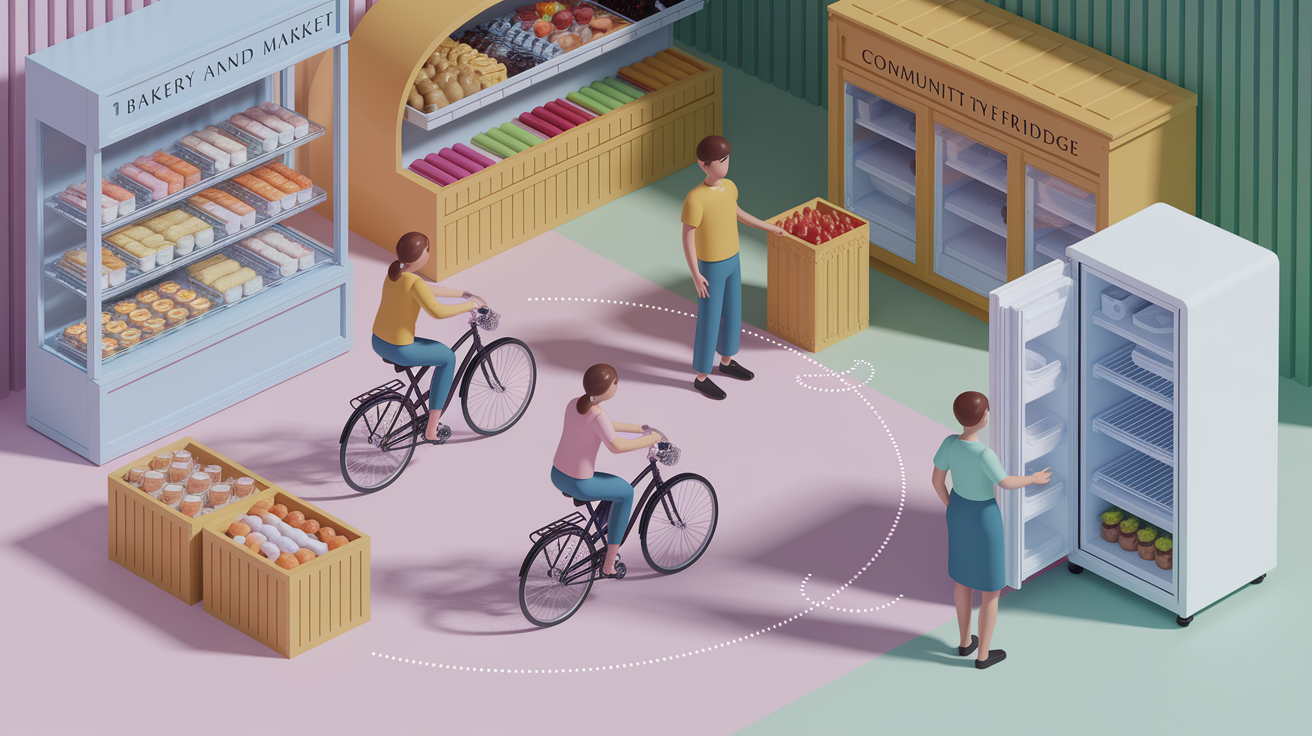
At its core, a community fridge runs on a straightforward relay. Food gets donated, volunteers make sure it’s safe and properly stored, and then it’s ready for anyone who needs it to simply walk up and take it. Here’s how that process typically unfolds, step by step.
- Securing donations – Restaurants, bakeries, supermarkets, farmers markets, and home cooks contribute food. Even one donation a week from a single source helps keep shelves from going empty.
- Checking acceptance criteria – Before anything goes in, it’s checked against basic rules. Half eaten food, raw meat, opened containers, and anything without a clear label usually gets turned away.
- Wrapping and labeling – Donors wrap items securely and mark them with the date, so nothing sits around as a mystery leftover.
- Transporting and stocking – Food gets carried, often by volunteers or the donors themselves, straight into the fridge.
- Cleaning and monitoring – Volunteers check in several times a week, wiping down shelves and pulling anything that’s turned or expired.
- Sharing status updates – Many fridges use a whiteboard, a WhatsApp group, or an Instagram page to let volunteers know what’s low, what’s spoiled, or what needs attention.
- Anonymous community pickup – Anyone can walk up and take what they need, whenever the fridge is accessible.
Donors and volunteers each carry a piece of the responsibility here. Donors are expected to date their items honestly and skip anything questionable, like that half eaten sandwich sitting in the office fridge. Volunteers, meanwhile, are the ones doing the unglamorous but essential work. Checking temperatures, wiping shelves, tossing anything past its prime, and making sure the fridge doesn’t become a forgotten corner nobody manages. Without this steady rhythm of care, the whole system falls apart fast. But when it works, it works quietly and well.
What makes this model feel different from a lot of assistance programs is what’s missing. There’s no sign up sheet. No proof of income. No waiting in line to explain your situation to a stranger. You just walk up, open the door, and take what you need. That kind of no questions asked access matters more than it might seem. It removes the awkwardness and stigma that can come with asking for help, and it lets people quietly meet a need without it turning into a whole ordeal. For a lot of folks, that privacy is the whole point.
Community Fridges Versus Traditional Food Banks
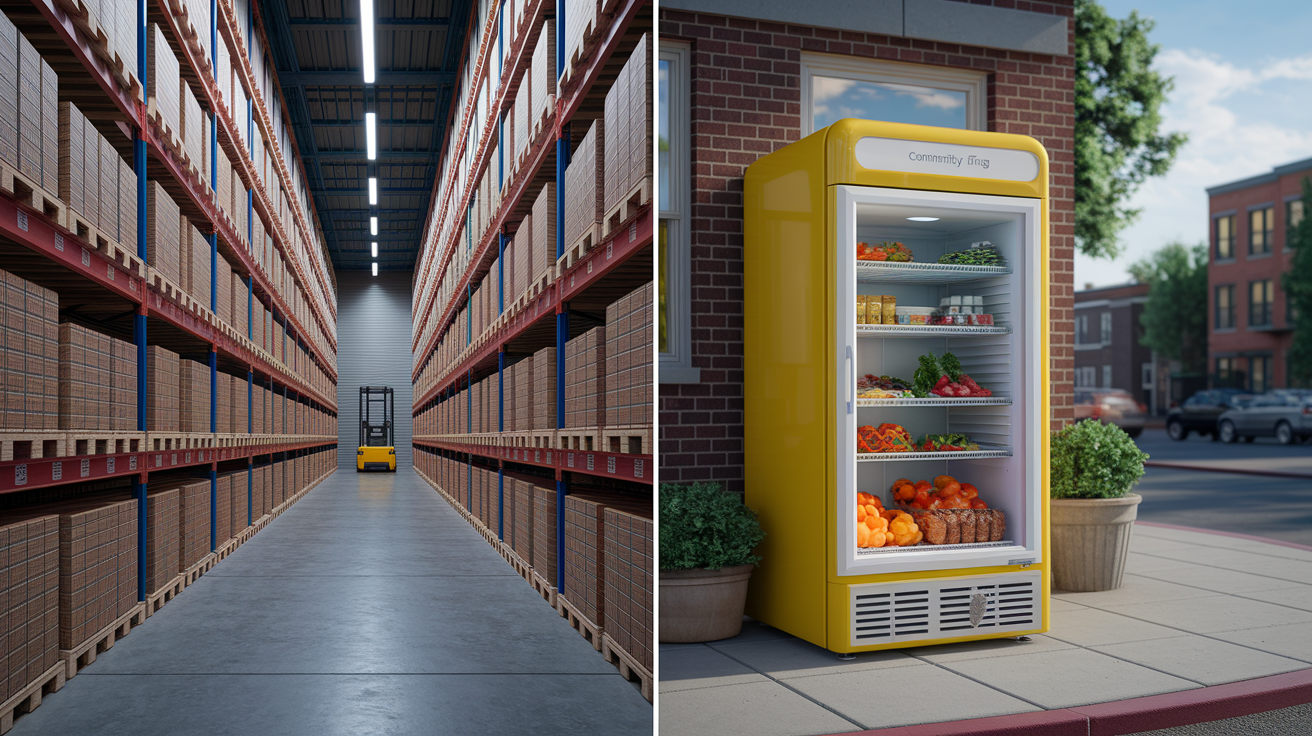
Food banks and community fridges are solving the same basic problem, but they’re built for different jobs. Food banks are set up to handle large volumes of shelf stable goods, think canned beans, boxed pasta, rice, and they usually operate on a bigger scale, serving wide regions through organized logistics. Community fridges are the opposite in almost every way. They’re small, hyperlocal, and built for food that needs to move fast, like leftover produce, prepared meals, or dairy that won’t last a week on a warehouse shelf.
The access model is where the contrast really shows up. Food banks often require registration, proof of need, or a scheduled pickup window, which makes sense given the scale they operate at. Community fridges skip all of that. There’s no appointment, no paperwork, no eligibility check. You can stop by at 7 a.m. or 9 p.m., depending on where the fridge is placed, and take what’s there. It’s less structured, sure, but that flexibility is exactly what makes it useful for someone who needs something right now, not next Tuesday.
Neither model replaces the other, and that’s kind of the beauty of it. Food banks handle bulk and consistency. Community fridges handle speed and immediacy. Together, they cover more ground than either could alone.
Evidence From Community Fridge Networks

Good evidence here tells a specific story: how much food is actually moving, how fast networks are growing, how often people are showing up, and what kind of real life difference it’s making. Numbers like these help separate a feel good idea from a program that’s genuinely working on the ground.
| Program or Evidence | Location | Measured Result |
|---|---|---|
| Remnant food research | United States | Micro quantity leftovers, like single sandwiches or pizza slices, make up roughly 40% of U.S. food waste |
| Bronx fridge network | New York City | First fridge launched September 2020 in Mott Haven; expanded to 8 total fridges across the Bronx and Manhattan |
| Love Fridge network | Chicago | Founded in 2020; now oversees more than 20 fridges moving an estimated
Final WordsDonors drop labeled meals, volunteers check and stock. Neighbors take what they need. No sign-up, no judgment. We walked through the donation-to-pickup flow, how fridges complement food banks, evidence from networks, and the environmental and safety trade-offs. You saw the “take what you need, leave what you can” idea and the simple rules that keep food safe. That mix of local action and careful practice shows why community fridges matter and points to clear answers for how community fridges reduce food waste and hunger. FAQQ: How to organize your fridge to prevent food waste?A: Organizing your fridge to prevent food waste means arranging items so you see and use them: put new items behind older ones, label and date containers, use clear bins, keep ready-to-eat foods front and plan weekly meals. Q: Are community fridges legal?A: Community fridges are generally legal but rules vary: check local health and zoning rules, get host permission, follow donation-labeling and safety guidance, and consider simple liability steps like posted rules or a partner nonprofit. Q: How does the community fridge work?A: The community fridge works by letting volunteers accept wrapped, labeled and dated donations, stock and monitor a public fridge, and let anyone pick up food anonymously—often under the “take what you need, leave what you can” principle. Q: Are community fridges good?A: Community fridges are good because they redirect edible surplus to people facing food insecurity, increase local access to fresh food, and complement food banks—though they rely on volunteers and clear safety rules to work well. |
