What if your neighborhood could fight hunger with a shovel?
Community gardens do exactly that—by putting fresh fruits and veggies where people can reach them.
They cut grocery bills, lift diets, teach growing skills, build sharing networks, and make neighborhoods more food-resilient.
This post walks through six clear pathways from planting to better food access and shows who benefits and how.
The evidence is promising, mostly local and seasonal, so it’s a practical step, not a magic fix.
Six Pathways From Gardens to Better Food Access
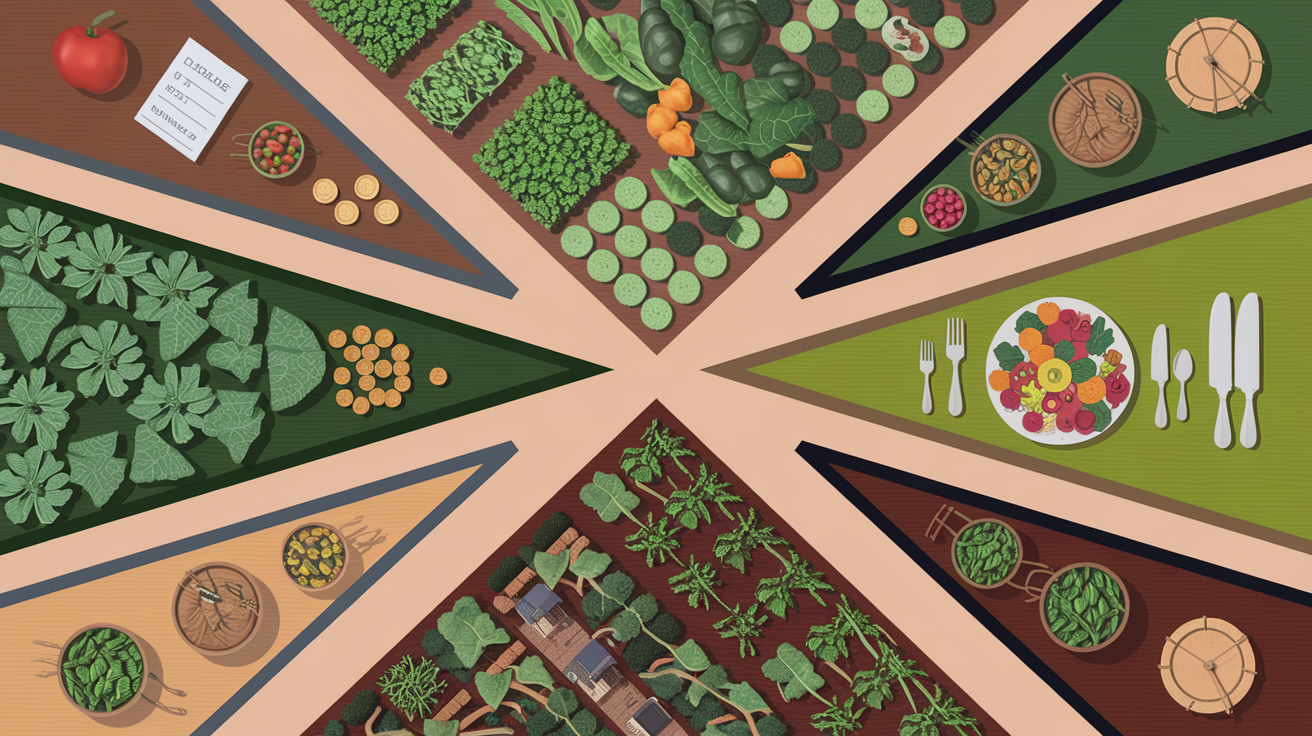
Community gardens boost food security in six ways. Three are direct: growing fresh produce, cutting grocery bills, and improving diets. Three work behind the scenes: teaching food-growing skills, building produce-sharing networks, and strengthening a neighborhood’s food resilience. Each pathway has its own body of evidence, and the table below maps out where to find the details.
| Mechanism | Representative Finding | Later Section |
|---|---|---|
| Fresh produce access | Multiple garden programs report substantial seasonal harvests, though exact totals vary widely by site, climate, and garden size (specific study details flagged for verification). | How Much Fresh Produce Do Community Gardens Actually Provide? |
| Household savings | Several studies document real grocery savings tied to garden participation, though figures depend on region and season (study source and sample size flagged for verification). | Do Community Gardens Really Save Households Money on Food? |
| Nutrition improvement | Garden participants across several surveys report eating more fruits and vegetables than before joining, with the strength of the effect differing by study design. | How Much Fresh Produce Do Community Gardens Actually Provide? |
| Skills and education | Programs pairing garden access with nutrition or growing education tend to show stronger results than garden access offered on its own (source and sample size flagged for verification). | What Skills and Education Do Community Gardens Provide? |
| Food distribution networks | Produce sharing and donation systems tied to community gardens extend fresh food to neighbors and pantry visitors who never pick up a trowel themselves. | Food Distribution Networks section |
| Community resilience | Local production, retained growing skills, and neighbor to neighbor cooperation combine to form a supplementary food channel a community can lean on during hard stretches. | Community Resilience section |
Here’s the honest note that belongs right up front. The evidence behind these six pathways is genuinely encouraging, but a lot of it comes from local, seasonal, observational, or self reported research. That means it’s promising, not a settled, universal guarantee.
Final Words
We laid out six pathways from gardens to better food access: three direct—fresh produce, grocery savings, and diet improvement—and three indirect—education, sharing networks, and local resilience.
Each pathway links to a deeper section on yields, money, skills, distribution, or resilience, and the post flags where studies are local, seasonal, observational, or missing details.
Taken together, the evidence shows how community gardens reduce food insecurity in practical ways, even as stronger research would help; it’s a hopeful, workable step communities can build on.
FAQ
Q: How do community gardens improve food security?
A: Community gardens improve food security by increasing fresh produce access, reducing household grocery costs, and boosting produce intake. They also help through growing and nutrition education, produce-sharing networks, and stronger local food resilience.
Q: What evidence shows community gardens provide fresh produce?
A: Evidence shows community gardens produce substantial seasonal harvests, reported in local observational studies. Many reports lack full study names, dates, or sample sizes, so verify details in “How Much Fresh Produce Do Community Gardens Actually Provide?”
Q: Do community gardens save households money on food?
A: Community gardens save households money on groceries in documented studies. Many reports omit precise amounts and study details, so check “Do Community Gardens Really Save Households Money on Food?” for the full evidence review.
Q: Can community gardens increase produce intake and improve nutrition?
A: Community garden participation increases reported produce intake and can improve diets. The biggest improvements occur when gardens pair with nutrition education, though much evidence is self-reported and locally based.
Q: What skills and education do community gardens provide?
A: Community gardens provide hands-on growing skills and basic nutrition knowledge. Programs combining access plus education usually outperform access alone, but study methods and sample sizes vary so outcomes differ by program.
Q: How do community gardens share produce and strengthen local food resilience?
A: Community gardens extend benefits through produce-sharing and donation networks reaching non-gardeners, while local production, kept growing skills, and neighbor cooperation create a supplementary, flexible food channel during shortages.
Q: How reliable is the research on community gardens and food access?
A: The research is promising but often comes from local, seasonal, observational, or self-reported studies, which limits broad causal claims and long-term conclusions and points to the need for larger, controlled research.
