Could a city that flooded across 80% of its streets and lost tens of thousands of residents still rebuild itself and in ways that matter?
New Orleans faced that test after Hurricane Katrina in 2005, when levees failed, waters rose up to 20 feet in places, and damage topped about $125 billion.
What followed wasn’t a single fix but a messy, years-long mix of big federal projects, housing grants, and thousands of neighbor-led repairs.
This case study shows what worked, what fell short, and the clear lessons other towns can use when they rebuild.
New Orleans Rebuilds: A Hurricane Katrina Recovery Case Study
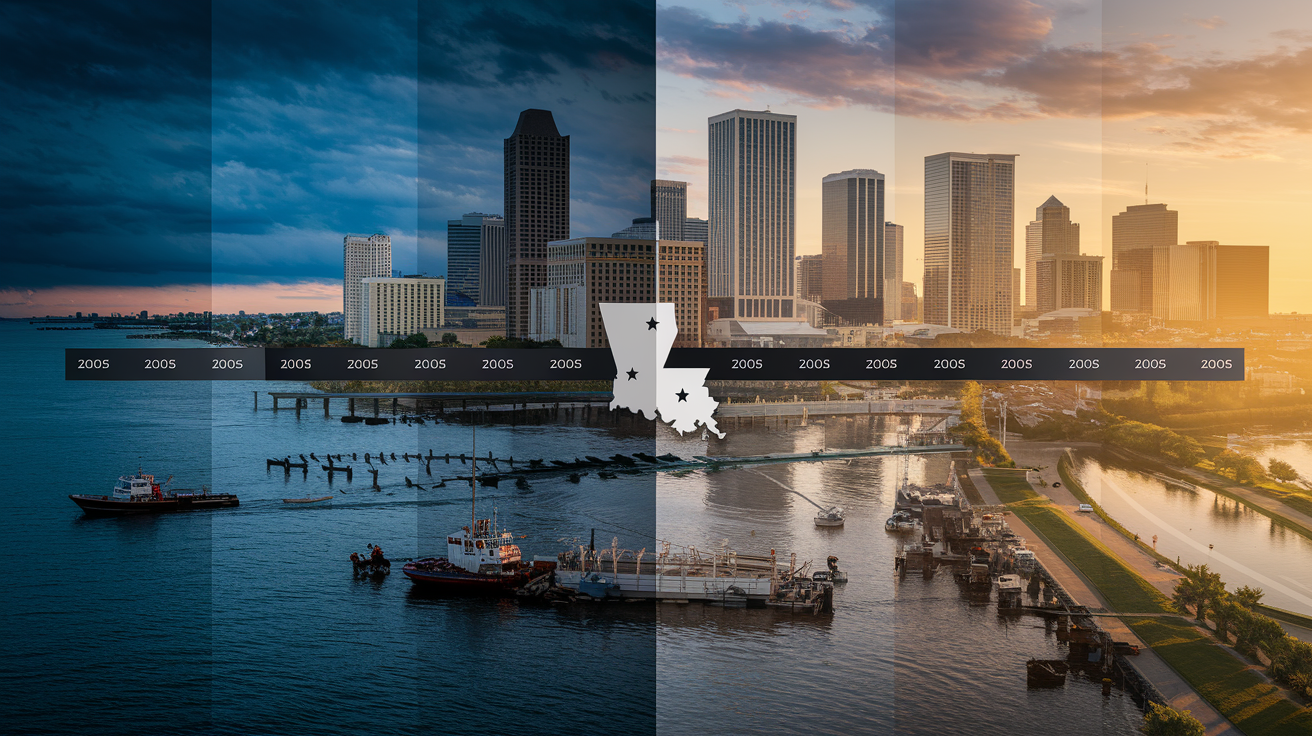
New Orleans, Louisiana, stands as one of the clearest examples of how a major American city can face near total devastation and still find its way back. Hurricane Katrina made landfall on August 29, 2005. Within two days, the levees failed, and floodwater covered more than 80% of the city, reaching depths of up to 20 feet in some neighborhoods. The damage bill topped $125 billion, making it one of the costliest natural disasters in U.S. history.
The recovery that followed wasn’t one single fix. It was a combination of forces working at once. Massive federal infrastructure spending through the Hurricane and Storm Damage Risk Reduction System (HSDRRS, roughly $14.6 billion), housing grants distributed through HUD’s Community Development Block Grant program, and thousands of small, community led rebuilding efforts that filled the gaps government programs couldn’t reach. This wasn’t a quick turnaround. It played out over almost two decades, and in many ways, it’s still playing out today.
The numbers tell part of the story. New Orleans had 484,674 residents before the storm, according to the 2000 census. That number collapsed to roughly 343,829 by 2010. Today, the city sits around 383,000 people, about 78% of where it started. The flood protection system that failed so catastrophically in 2005 was substantially rebuilt by 2011 to 2012. But recovery hasn’t been even. Neighborhoods like the Lower Ninth Ward, home to a majority Black population before the storm, remain below 50% of their pre Katrina population even now.
“We didn’t just rebuild houses, we rebuilt trust in a city that had every reason to leave,” one longtime New Orleans resident reflected years after the storm. That sentiment captures something the statistics can’t. Recovery here was as much emotional as it was structural.
Visual: Timeline graphic showing landfall, levee breach, and key recovery milestones (2005 to 2020s).
Recovery Timeline: From Emergency Response to Long-Term Resilience
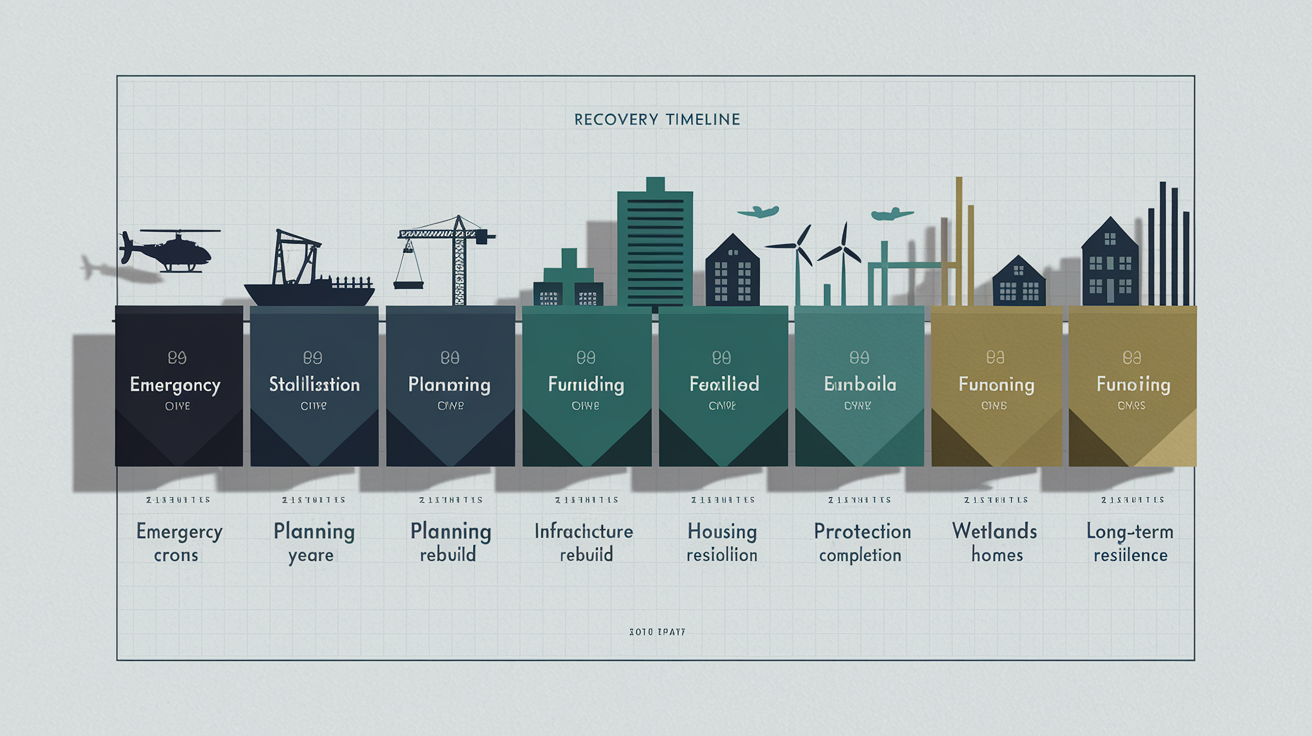
Rebuilding a city the size of New Orleans doesn’t happen in a straight line. It happens in overlapping waves, some fast and chaotic, others slow and bureaucratic, stretching across years and even decades.
In the immediate aftermath, the basics of daily life simply stopped working. Power was out. Water wasn’t safe. Public transit was gone. Food supply chains broke down across the region. What followed was a phased, sometimes messy, sequence of rebuilding that moved from emergency triage toward long term planning.
| Date/Period | Phase | Key Developments |
|---|---|---|
| Aug-Sept 2005 | Emergency Response | Search and rescue operations, mass evacuation, initial damage assessment |
| Sept-Dec 2005 | Stabilization | City dredging (43 days), large-scale debris clearance, utility restoration begins |
| Late 2005-2006 | Planning and Funding | Formation of recovery commissions and plans, early federal funding allocations |
| 2006-2010 | Infrastructure Rebuild | Levee and pump station reconstruction begins, city master planning finalized |
| 2010-2012 | Housing and Protection Completion | Staged housing recovery programs roll out, HSDRRS substantially completed |
| 2012-present | Long-Term Resilience | Ongoing wetland restoration, infrastructure monitoring, neighborhood-level recovery work |
It’s worth saying clearly, these phases didn’t unfold as neatly in real life as they do on paper. Emergency response operations were still happening in some neighborhoods while planning commissions met in others. Housing grants were being processed years after infrastructure restoration had already finished in nearby districts. Recovery, it turns out, rarely respects a tidy schedule.
Visual: Horizontal timeline chart mapping the six recovery phases against calendar years.
Funding Sources That Powered the Rebuild

Rebuilding New Orleans took money. A lot of it. And it came from more places than most people realize.
The largest single piece was federal infrastructure investment. The Army Corps of Engineers led construction of the Hurricane and Storm Damage Risk Reduction System, a massive undertaking that cost approximately $14.6 billion. That money rebuilt levees, floodwalls, and pump stations to a far higher protection standard than what failed in 2005. It’s the kind of investment that’s easy to overlook until you remember what happens without it.
Beyond infrastructure, federal and state recovery funding for Louisiana reached tens of billions of dollars total. Within that, somewhere between $10 and $13 billion went specifically toward homeowner and community recovery programs, largely channeled through HUD’s Community Development Block Grant Disaster Recovery (CDBG-DR) allocations. These programs, most notably the Road Home initiative, paid out grants to tens of thousands of households so families could repair, elevate, or rebuild their homes.
But the process wasn’t smooth. Many homeowners waited years, not months, for their payments to arrive. Eligibility disputes were common. Paperwork got lost. Families who’d already lost everything found themselves fighting bureaucracy on top of disaster. It’s one of the harder truths of the Katrina recovery. The money eventually came, but “eventually” meant real hardship for real people in the meantime.
Filling those gaps was a network of nonprofits and philan
Final Words
New Orleans took a direct hit on August 29, 2005: levee breaches flooded about 80% of the city and damage topped $125 billion. The scene was immediate and overwhelming.
Recovery mixed big federal and state investments, HSDRRS levee work, HUD housing grants, and community-led rebuilding over roughly two decades. Flood protections were largely in place by 2011–2012, though some neighborhoods still lagged.
This how one town rebuilt after hurricane case study shows steady progress, real lessons learned, and room to keep building a fairer, more resilient future.
FAQ
Q: What happened in New Orleans during Hurricane Katrina?
A: The immediate catastrophe in New Orleans from Hurricane Katrina was landfall on August 29, 2005; levee breaches flooded over 80% of the city, causing roughly $125 billion in damage.
Q: How did New Orleans coordinate its recovery strategy?
A: New Orleans coordinated recovery through large federal-state infrastructure investment (HSDRRS), HUD housing grants, and community-led rebuilding over roughly two decades, combining top-down funding with local action.
Q: What were the key phases and timeline of the recovery?
A: The recovery followed phases: emergency response (Aug–Sept 2005), stabilization and dredging, planning and funding (late 2005–2006), infrastructure rebuild (2006–2010), protection completion (2010–2012), then long-term resilience.
Q: How long did flood protection take to restore?
A: Flood protection was substantially completed by 2011–2012 under the HSDRRS, a roughly $14.6 billion Army Corps program rebuilding levees, floodwalls, and pumps to reduce future risk.
Q: How did housing recovery unfold and who was helped least?
A: Housing recovery was uneven: HUD CDBG-DR and Road Home grants helped many, but slow disbursements and eligibility disputes left lower-income, majority-Black neighborhoods like the Lower Ninth Ward still under half pre-storm population by the 2020s.
Q: How much funding rebuilt New Orleans and where did it come from?
A: Rebuilding drew tens of billions from federal and state sources—HSDRRS (~$14.6B), HUD CDBG-DR, FEMA assistance—plus nonprofit, philanthropic, and local funds covering homeowner programs and infrastructure projects.
Q: What measurable outcomes show recovery progress?
A: Measurable outcomes include population returning from 484,674 (2000) to about 343,829 (2010) then roughly 383,000+ recently, levee protection largely finished by 2011–2012, and ongoing neighborhood recovery gaps.
Q: What were the main challenges during recovery?
A: Main recovery challenges were slow grant processing, eligibility disputes, unequal neighborhood recovery, disrupted utilities and transit, and long timelines required for complex infrastructure like levees and pumps.
Q: What lessons can other towns learn from New Orleans’ case study?
A: Other towns can learn to pair strong engineered flood protections with community-led housing plans, secure predictable funding, prioritize equity, and plan for phased, overlapping recovery that lasts years, not months.
Q: Where can I find official data on Katrina damage and recovery?
A: The official Katrina damage and recovery data is available at https://www.data.gov under “Hurricane Katrina damage and recovery data” for population, damage, and funding statistics.
